Highlights:
- The structural inflation in the US remains stubborn and difficult to address, and we believe that the rate environment will remain higher for a longer than market expectations.
- Bond yields are currently at their highest levels since 2007, providing investors with an opportunity to capture yield from short-term US Treasuries and certificates of deposit. Additionally, the attractiveness of medium- to long-term bonds has increased, and investors should no longer avoid them.
- High investment grade (A-rated or above) corporate bonds are a better choice for investors targeting extra yield pickup.
- While overall global high-yield bonds still appear unattractive, bonds issued by individual companies can sometimes offer promising returns and could be considered by aggressive investors.
Golden Time to Invest into Short-term Bonds
As expected, the market narrative has shifted towards no rate cut in 2023. During the latest FOMC meeting, the median interest rate forecast by 18 Fed officials was even as high as 5.6% at the end of the year, representing a further 50bps hike.
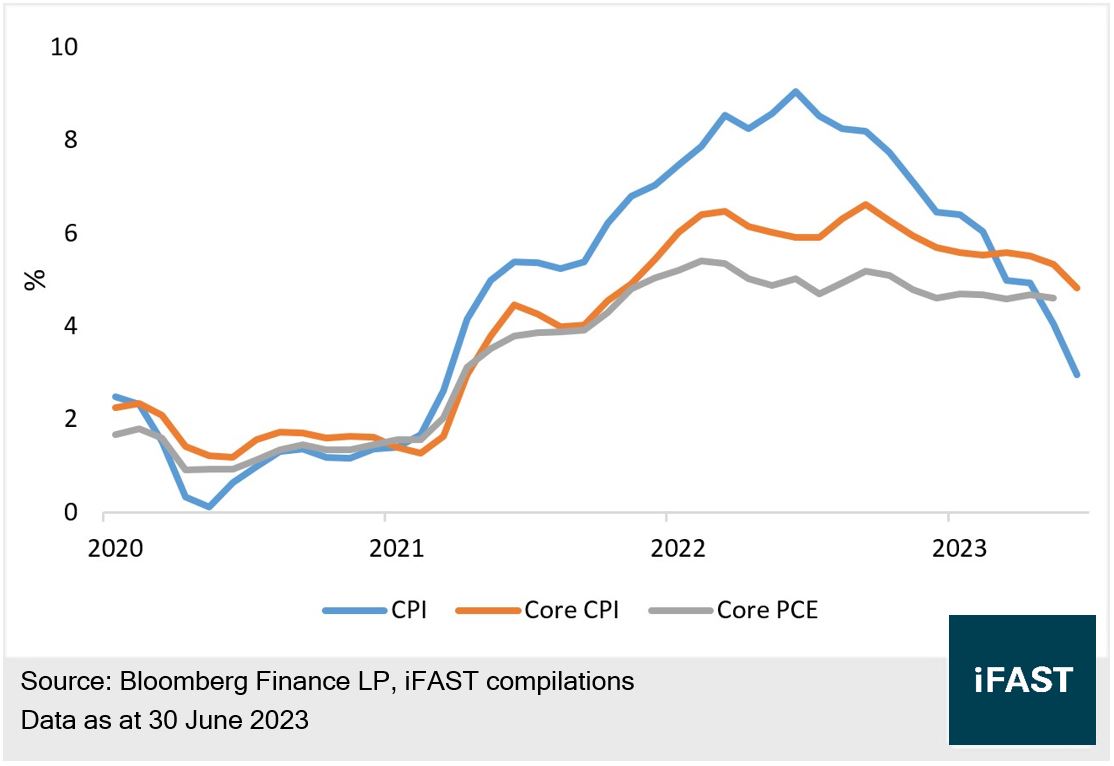
In fact, the key inflation indicator used by the Fed is the core inflation, which excludes food and energy factors. At this point, although the headline inflation rate has seemingly cooled down to 4%, core inflation remains stubborn and is still a long way to go to reach the 2% target (see Chart 1).
Chart 1: CPI, Core CPI and Core PCE
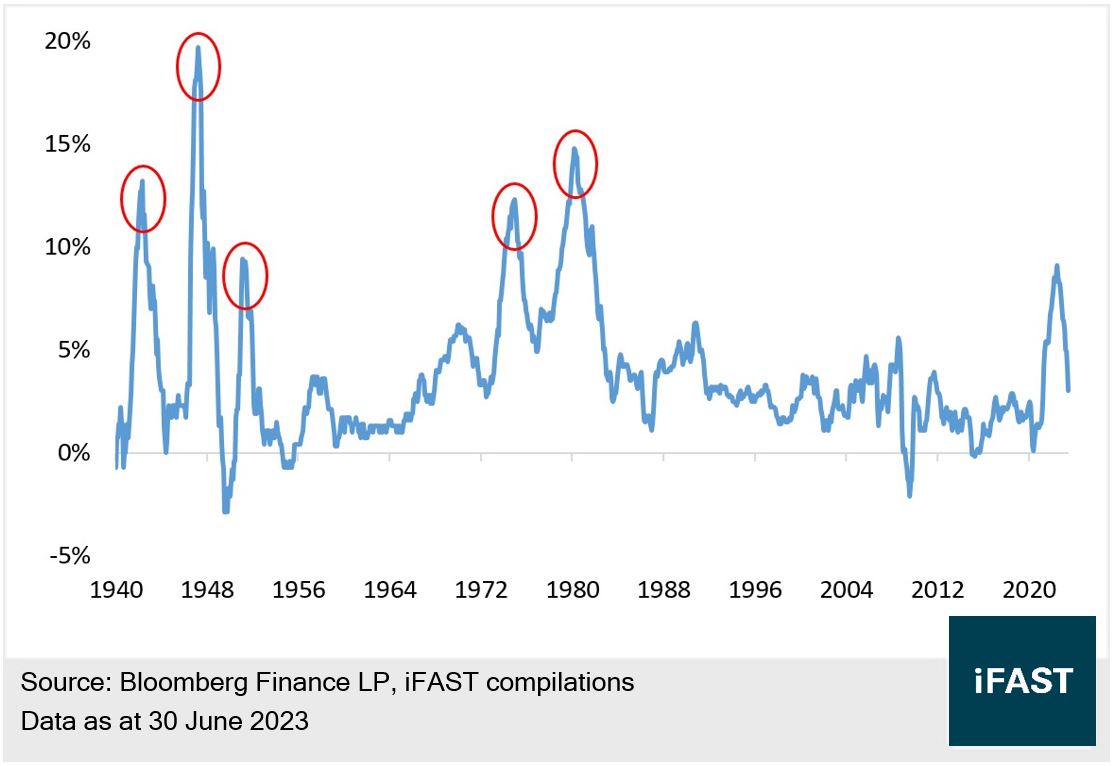
As we mentioned earlier this year, some of the structural factors including the high inflation in services sector driven by the strong wage growth (see Chart 2) and the consistent supply-side pressure brought by de-globalization are difficult to tackle within a short period. In addition, with reference to the previous two high inflation cycles in 1940-50s and 1970-80s, inflation had rebounded in both periods, and the second peak was even higher than the first one (see Chart 3). Therefore, we believe the Fed may keep the high interest rate environment for longer period to avoid any rebound in inflation caused by policy mistakes.
Chart 2: Wage Growth
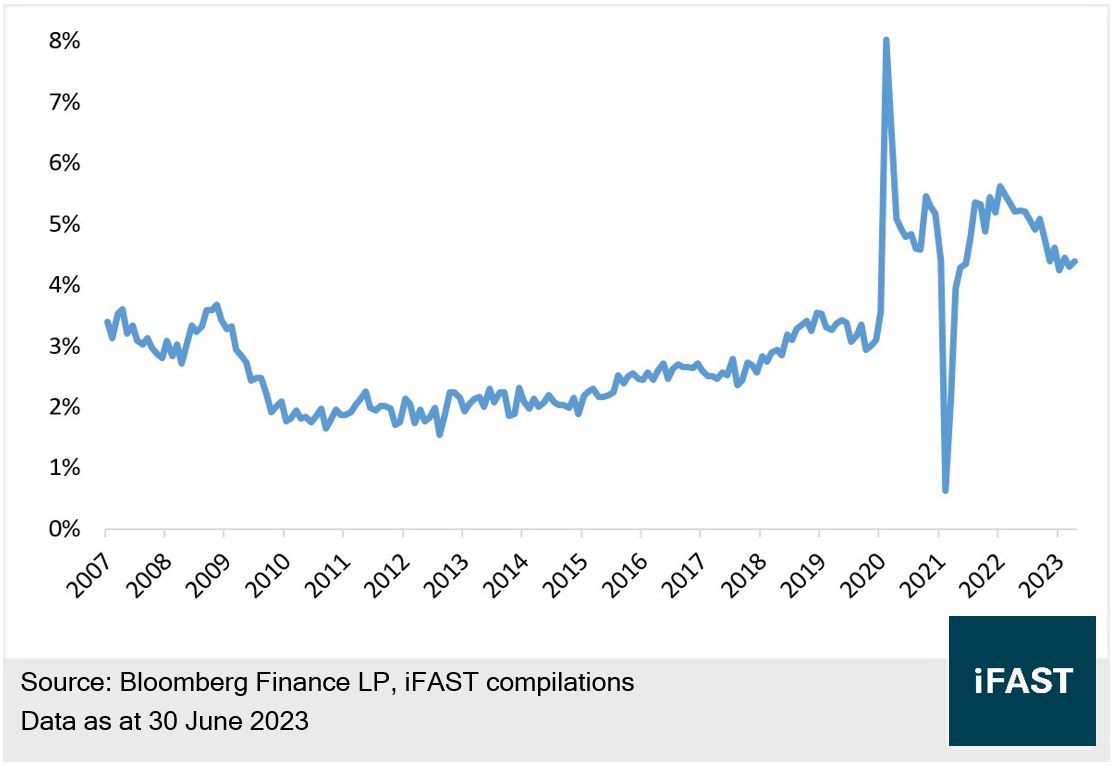
Chart 3: Historical CPI
Currently, the interest rate and bond yields in US are both at their highest levels since 2007. The yield curve is still heavily inverted (see Table 1), and the magnitude of 2-year and 10-year yield inversion is the deepest since 1981. With yields generally above 5%, short-term bonds (1 to 2 years) are the most attractive now and it is considered the golden time to buy.
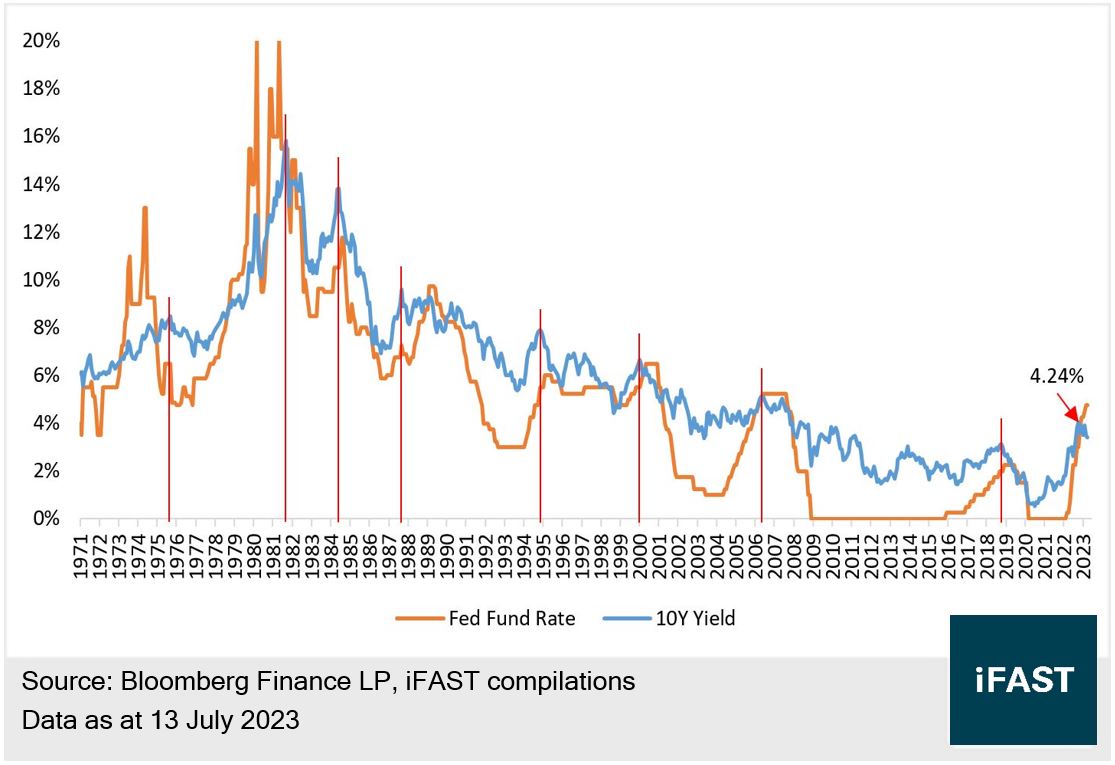
On the other hand, in all six rate hike cycles since 1984, the 10-year Treasury yield had peaked before the last hike (see Chart 4). Therefore, the attractiveness of medium- to long-term bonds has also increased, and it is no longer the time to avoid them.
Table 1: Yield Curve
| Tenor | Indicative Yield to Maturity |
| 6-month | 5.5% |
| 1-year | 5.3% |
| 2-year | 4.7% |
| 3-year | 4.3% |
| 5-year | 4.0% |
| 7-year | 3.9% |
| 10-year | 3.8% |
| Source: Bloomberg Finance LP Data as at 13 July 2023 | |
Chart 4: 10-year Treasury Yield and Fed Fund Target Rate
High Investment Grade and Non-AT1 Bank Bonds Offer Decent Investment Value
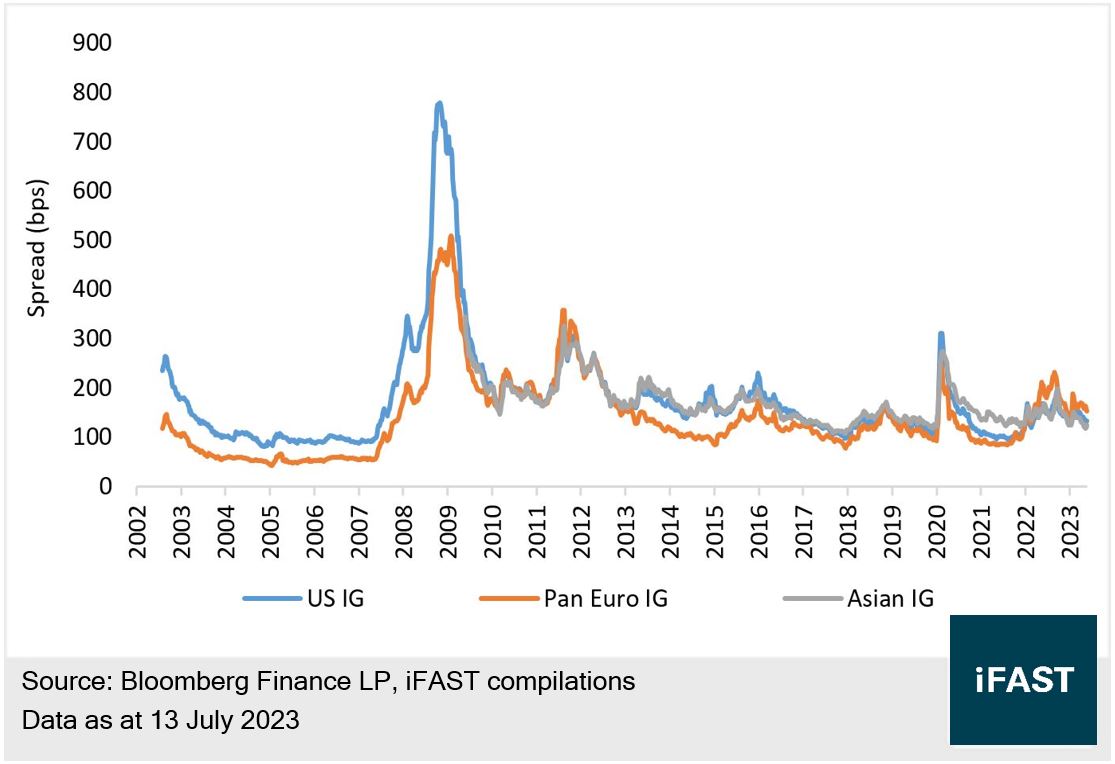
For investment grade bonds, the overall yield spread levels are hovering at historical means now (see Chart 5).
Chart 5: Investment Grade Bonds’ Yield Spread
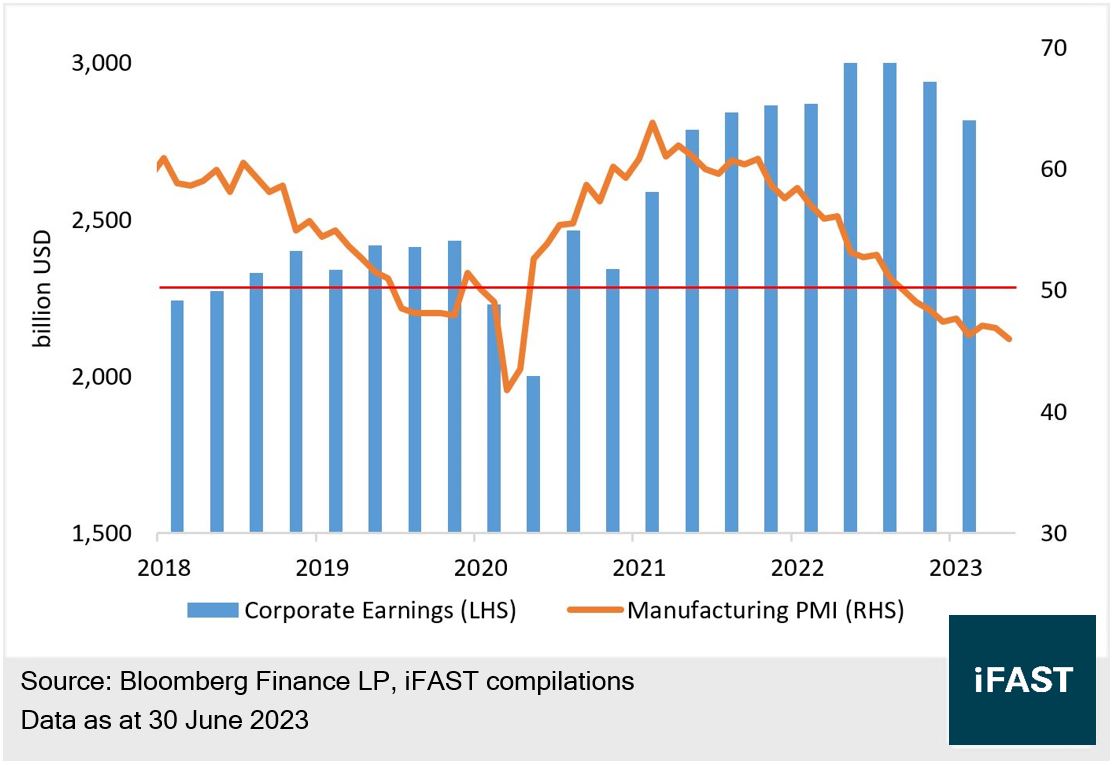
In the first half of this year, the nerve-racking banking crisis once happened in US did not drag down the economy. Not only did employment data repeatedly beat expectations, but Q1 real GDP growth was also revised upward to an annualized 2%. However, on the other side of the coin, the declining manufacturing PMI and corporate earnings figures (see Chart 6) showed that the recession risk in the country is still significant, and we think it is likely to happen next year.
Looking back at several economic crises before, the current spread level cannot significantly reflect the risks of a recession. Therefore, we believe that high investment grade (A-rated or above) corporate bonds are better choices for investors targeting extra yield pickup over US Treasuries, as their higher yield spread stability can offer better safety margin to investors.
Chart 6: Manufacturing PMI and Corporate Earnings
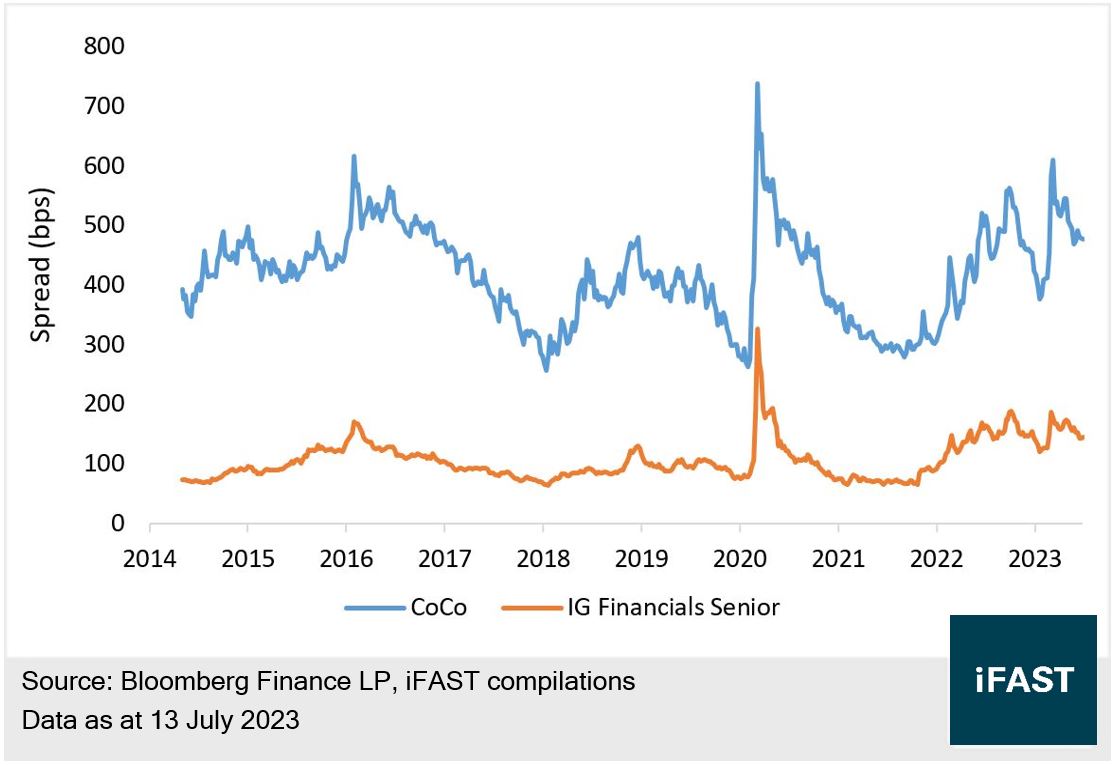
Amid the US local banking crisis and Credit Suisse’s incident, the overall yield spread of bank bonds is apparently higher than the historical mean now (see Chart 7), which could serve as an opportunity to investors. But considering the more complicated terms and the lower seniority of AT1 bonds, we are more in favor of the banks’ senior unsecured bonds and T2 bonds, sacrificing a part of investment return for better protection.
Chart 7: Bank Bonds’ Yield Spread
High Yield Bonds Remain Unattractive
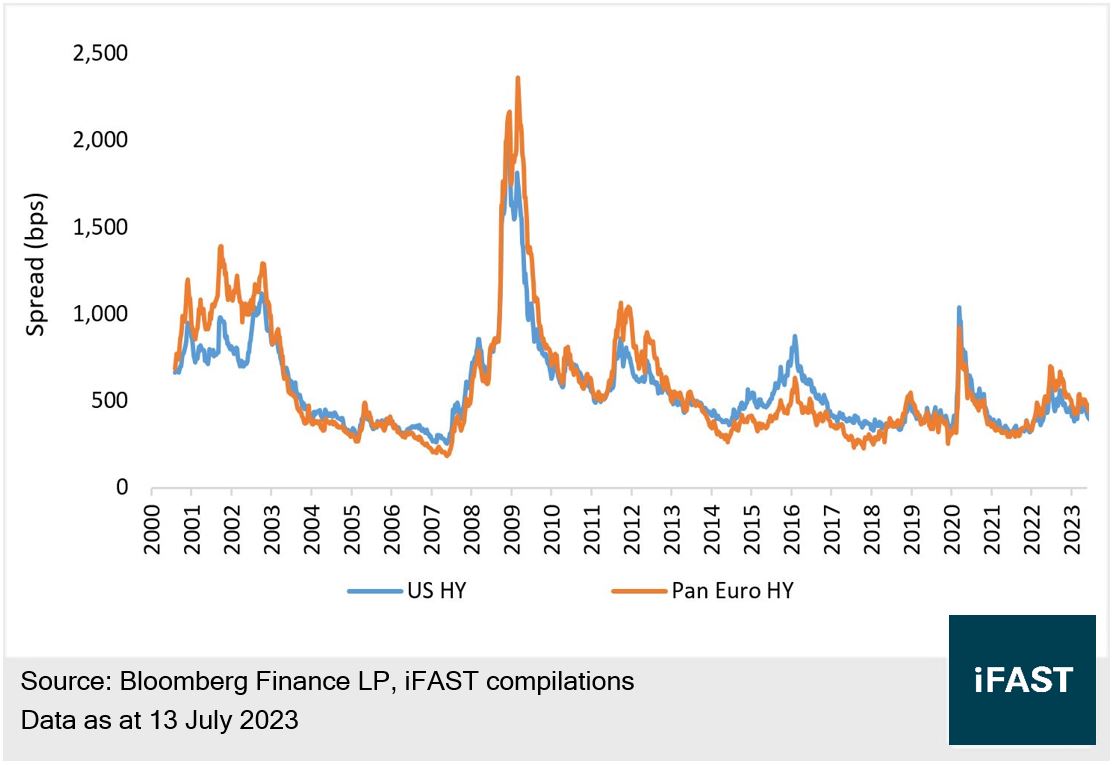
At this moment, the US and European high yield bond spreads are slightly higher than the historical mean (see Chart 8), which we think cannot compensate for the credit risks brought by a recession.
Chart 8: US and European High Yield Bonds’ Yield Spread
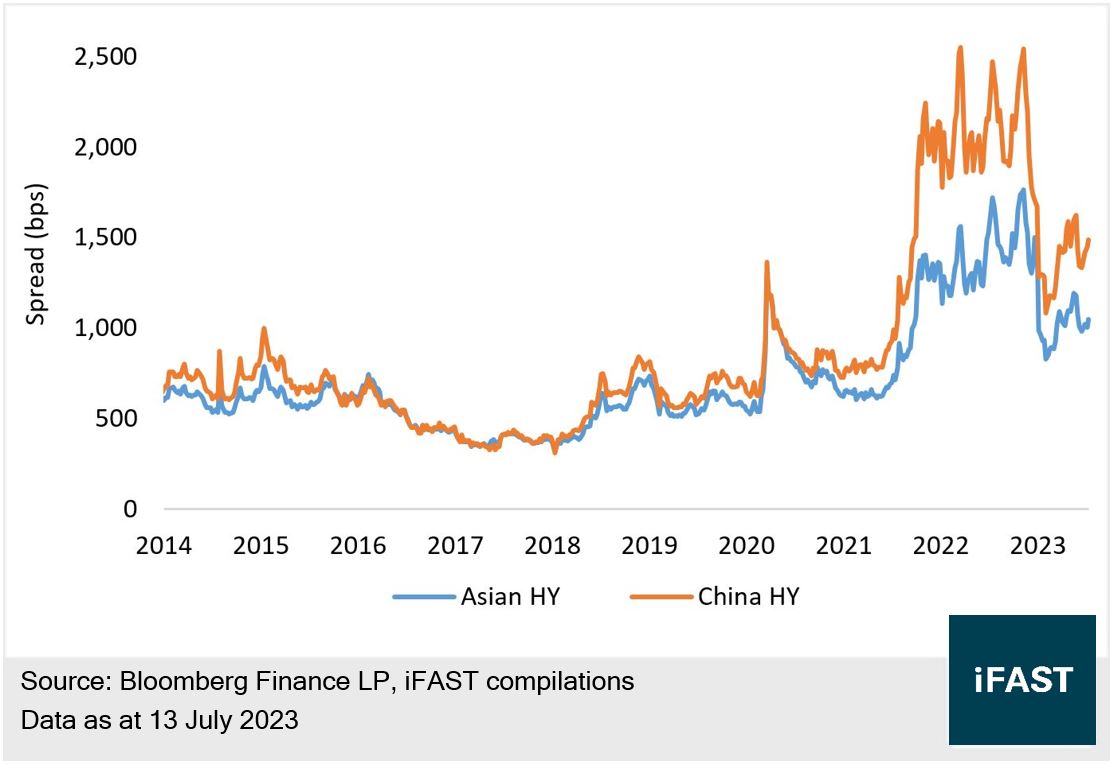
Meanwhile, Asian high yield bonds are still impacted by the sluggish Chinese real estate sector. Despite that the developers are rolling out restructuring plans, the terms are generally worse than market expectations. With the yield spread widening again since January (see Chart 9), the overall outlook remains uncertain and it is unlikely to see a price recovery in the short-term.
Chart 9: Asian and Chinese High Yield Bonds’ Yield Spread
Still, bonds issued by individual companies can sometimes offer promising return and could be considered by more aggressive investors. We will continue to publish more bond research articles, and please stay tuned for our latest updates.
Our podcast series, Yield Hunters, is available on Spotify, iTunes Podcasts and Google Podcasts. We share our thoughts on new bond issues and hold discussions on the fixed income space. Listen to our latest episode below and follow us!